January 23, 2026
Kanji Basics Explained
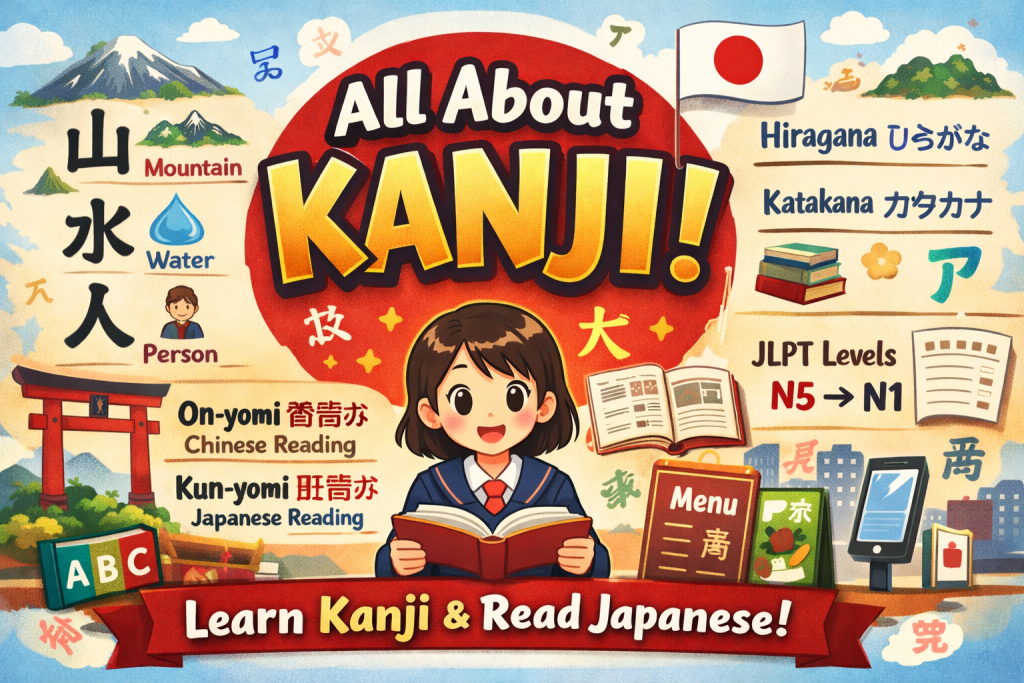
Kanji are Japanese characters that originally came from China. Each kanji usually has a meaning and often represents an idea, object, or action—like water, tree, eat, or person.
Unlike the alphabet, where letters just make sounds, one kanji can carry meaning by itself. For example:
山 = mountain
水 = water
人 = person
Most kanji also have more than one reading:
On-yomi → sound based on Chinese pronunciation
Kun-yomi → native Japanese reading
Kanji are used together with two other Japanese scripts:
Hiragana – for grammar and endings
Katakana – for foreign words
People in Japan learn kanji slowly over many years. Students study a basic set in school, and language tests like JLPT group kanji by difficulty (N5 is easy, N1 is very advanced).
In daily life, kanji appear everywhere—on signs, books, menus, newspapers, and apps. Learning them helps you read faster, understand meanings better, and enjoy Japanese content more