March 11, 2026
Productivity Systems for High-Level JLPT Learners
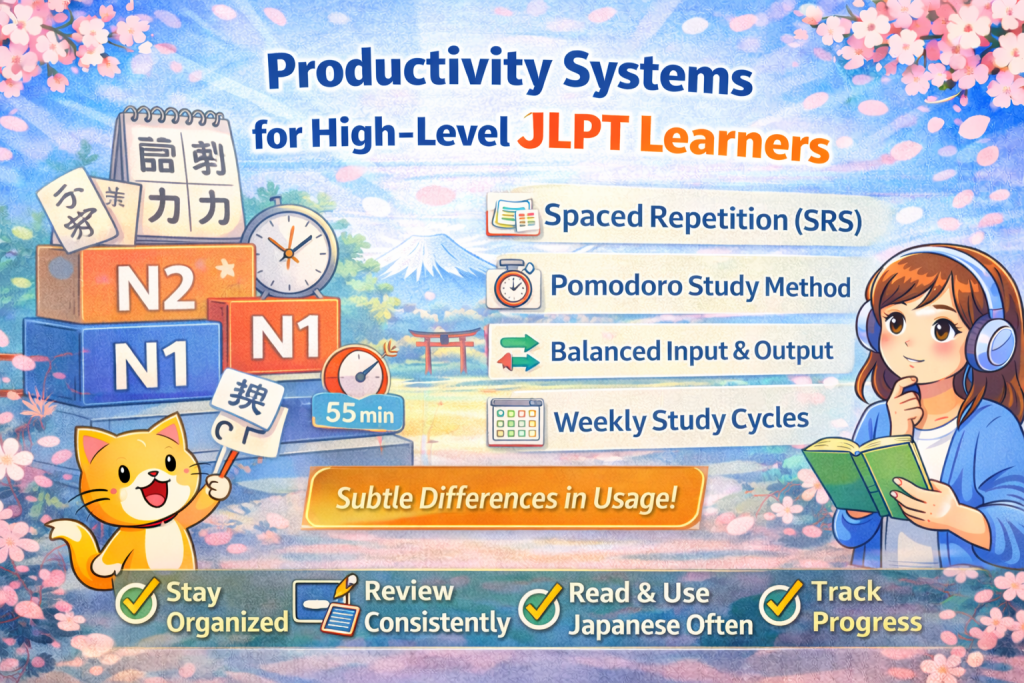
Reaching the advanced levels of Japanese requires more than just studying hard it requires studying smart. As you prepare for higher levels like N2 or N1 in the Japanese Language Proficiency Test, the amount of vocabulary, kanji, reading material, and listening practice increases dramatically. At this stage, many learners struggle not because they lack motivation, but because they lack an efficient study system. A good productivity system helps you manage your time, focus on the right materials, and maintain consistent progress.
In this article, we’ll explore several productivity systems that can help high-level JLPT learners study more effectively.
Why Productivity Systems Matter for Advanced Learners
At beginner levels, simple daily practice may be enough. However, advanced levels require managing multiple learning components, such as:
Advanced grammar patterns
Large kanji sets
Complex reading passages
Fast listening materials
Vocabulary used in real-world contexts
Without a structured system, it’s easy to feel overwhelmed. Productivity methods help break large goals into manageable steps.
The Spaced Repetition System (SRS)
One of the most effective study techniques for language learning is Spaced Repetition.
This system schedules reviews at increasing intervals so that information moves from short-term memory into long-term memory.
For JLPT learners, SRS is particularly useful for:
Kanji recognition
Vocabulary retention
Grammar pattern review
Instead of reviewing everything daily, the system focuses on material you are most likely to forget. This saves time and increases retention.
The Pomodoro Study Method
Advanced study sessions can become mentally exhausting, especially when reading complex Japanese texts. The Pomodoro technique helps maintain focus by dividing study time into short intervals.
A typical Pomodoro session looks like this:
25 minutes of focused study
5-minute break
Repeat four times
Take a longer break afterward
This method prevents burnout and keeps your concentration sharp during long study sessions.
The Input–Output Balance System
Many learners spend too much time memorizing and not enough time applying what they learn.
A balanced productivity system includes both input and output.
Input Activities
Reading articles or books
Listening to podcasts or news
Studying grammar explanations
Output Activities
Writing sentences
Speaking practice
Summarizing what you read
For high-level learners, output is essential for strengthening comprehension and fluency.
Weekly Learning Cycles
Instead of randomly studying different topics each day, organize your learning into weekly cycles.
A typical weekly plan could look like this:
- Day 1–2: Vocabulary and kanji
- Day 3: Grammar review
- Day 4–5: Reading practice
- Day 6: Listening practice
- Day 7: Review and mock questions
This structured approach ensures balanced improvement across all JLPT skills.
The “Active Reading” Strategy
Advanced JLPT preparation involves a large amount of reading. Passive reading alone is not enough.
Active reading involves:
Highlighting new vocabulary
Looking up unfamiliar kanji
Writing short summaries
Noting grammar patterns
This method deepens comprehension and improves long-term retention.
Tracking Your Progress
One of the best productivity habits is tracking your progress.
You can track:
Kanji learned
Vocabulary mastered
Practice test scores
Reading speed improvements
Seeing your progress visually can boost motivation and help you identify weak areas.
Avoiding Burnout
High-level JLPT preparation can be demanding. To stay productive over the long term:
Set realistic study goals
Take regular breaks
Rotate study activities
Celebrate small achievements
Consistency is more important than intensity.
Preparing for higher JLPT levels requires a combination of discipline, strategy, and efficient study systems. Productivity frameworks like spaced repetition, Pomodoro sessions, and structured weekly plans can make your preparation more organized and effective.
Instead of trying to study everything at once, focus on building a system that supports steady progress.
With the right approach, even the most challenging JLPT levels become manageable and achievable.